

Is Wet Cat Food Better for Cat Hair? Yes, wet cat food can help make a cat’s coat look shinier and healthier, mainly because of its high moisture content and animal-based protein. But it is not the only thing that matters. Good hair health also depends on the right fats, vitamins, hydration, and overall diet quality — whether that food is wet or dry. Wet food gives an extra boost, but it works best as part of a full nutrition plan, not as a magic fix on its own.
If you have ever looked at your cat’s fur and wondered why it looks dull, dry, or a little rough, food is usually one of the first places to check. Skin and coat problems in cats are very often linked to what they eat. So the question “does wet food help with cat hair” is actually a smart one to ask. Let’s break it down in a simple, easy way.
Why People Believe Wet Food Improves Cat Hair
Cats are not naturally big water drinkers. In the wild, cats got most of their water from prey, not from a bowl. That instinct is still there today. Many house cats simply do not drink enough water on their own, and this can quietly affect their skin and coat over time.
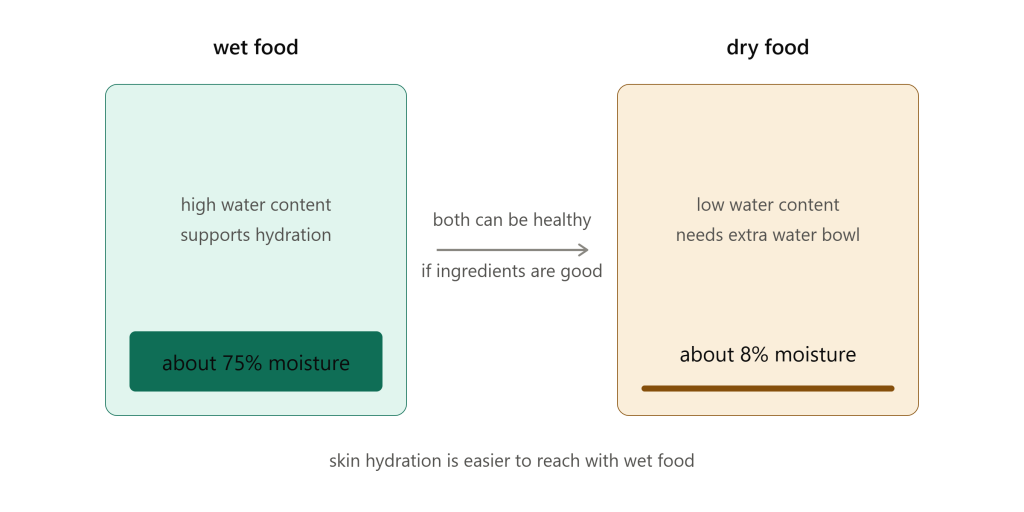
Wet cat food usually contains around 70–80% moisture, while dry kibble contains only about 6–10%. This difference is huge. When a cat eats wet food regularly, it naturally gets more hydration without needing to drink extra water. Good hydration supports healthy skin, and healthy skin is the foundation of healthy fur.
Think of it like this: dry, flaky skin usually leads to dry, brittle hair. Well-hydrated skin has a much better chance of growing soft, shiny fur.
What Actually Makes a Cat’s Coat Healthy
Before saying wet food is “more important,” it helps to understand what a healthy coat really needs. A shiny, soft cat coat depends on a mix of factors:
- High-quality animal protein – Hair is mostly made of protein (keratin), so a low-protein diet can lead to weak, thin fur.
- Essential fatty acids – Omega-3 and Omega-6 fatty acids keep skin from getting dry and support shine.
- Vitamins and minerals – Vitamin A, Vitamin E, zinc, and biotin all play a role in skin and coat strength.
- Proper hydration – Water supports skin cell health from the inside.
- Overall diet balance – Even the best single ingredient cannot fix a poorly balanced diet.
Wet food often scores well in several of these areas because it tends to have higher protein and fat content from real meat or fish, along with that all-important moisture. But dry food can also be formulated with the same nutrients. So the format (wet vs dry) matters less than the actual ingredient quality inside the food.
Wet Food vs Dry Food for Cat Hair: A Simple Comparison
| Factor | Wet Food | Dry Food |
|---|---|---|
| Moisture content | High (70–80%) | Low (6–10%) |
| Protein source | Often richer in real meat | Varies by brand |
| Convenience | Needs refrigeration after opening | Easy to store |
| Cost | Usually higher | Usually lower |
| Effect on hydration | Strong positive effect | Minimal effect |
| Coat improvement | Noticeable in cats with dry skin | Possible with high-quality formulas |
This table shows that wet food has a clear edge in hydration, and hydration is a real, proven factor in skin and coat health. However, dry food is not automatically bad for fur — it depends on the recipe and ingredient quality.
Signs Your Cat’s Diet May Be Affecting Its Hair
Not sure if food is the real issue? Watch for these common signs:
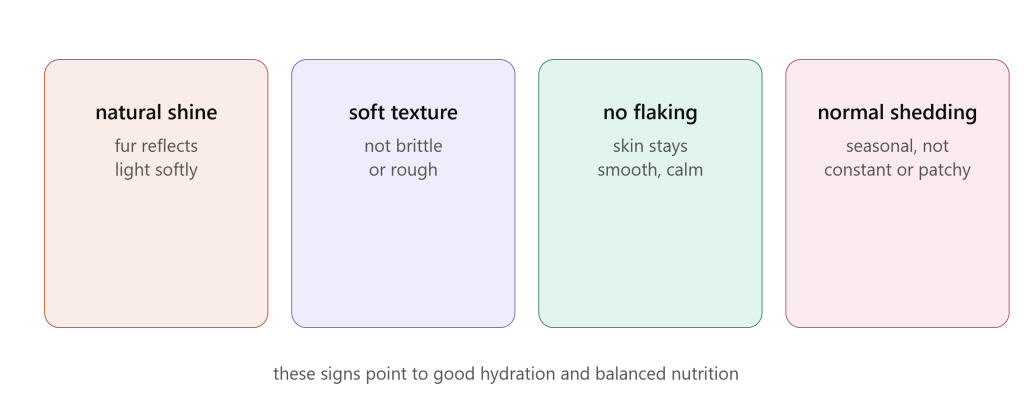
- Dull or rough-looking fur instead of a natural shine
- Excessive shedding beyond the normal seasonal amount
- Flaky or dry skin, sometimes visible as small white flakes
- Thinning fur in patches
- A coat that feels brittle rather than soft
If you notice several of these signs together, it is worth looking closely at your cat’s current food and asking whether it has enough protein, fat, and moisture.
Does Switching to Wet Food Really Help? What to Expect
Many cat owners who switch from dry-only diets to include wet food do notice a difference in coat quality within a few weeks to a couple of months. This is not instant magic — hair growth and renewal take time, usually around 4 to 8 weeks to show visible change.
Here is what commonly improves:
- Softer texture within a few weeks
- Slightly less shedding once skin hydration improves
- A more natural shine as fatty acids get absorbed properly
But it is important to set realistic expectations. If a cat has an underlying health issue — like thyroid problems, allergies, or parasites — switching food alone will not fully solve the coat problem. In that case, a vet visit is the smarter first step.
Can Dry Food Alone Give a Cat a Healthy Coat?
Yes, it is absolutely possible. High-quality dry cat food that includes named animal proteins (like real chicken or fish, not vague “meat by-products”), added omega fatty acids, and balanced vitamins can support a healthy coat just fine. The key difference is that cats eating only dry food need access to plenty of fresh water throughout the day to make up for the lower moisture in their meals.
So the real comparison is not really “wet vs dry” — it is “quality vs low quality,” combined with how much water the cat is actually drinking.
The Best Approach: Combining Wet and Dry Food
Many veterinarians and pet nutrition experts suggest a mixed feeding approach for the best overall results. This gives cats:
- The hydration benefits of wet food
- The convenience and dental benefits some dry foods offer
- A wider range of nutrients from two different food formats
- More variety, which many cats genuinely enjoy
A simple approach many owners follow is offering wet food once or twice a day alongside a smaller amount of quality dry food, always with fresh water available at all times.
Read more… Best Mid Fade Haircut Ideas for Men
Other Non-Food Factors That Affect Cat Hair
Diet is important, but it is not the whole story. A cat’s coat can also be affected by:
- Regular brushing – Removes loose hair and spreads natural skin oils
- Hydration from water bowls – Especially important if the cat mostly eats dry food
- Stress levels – Stressed cats can over-groom or under-groom, affecting coat quality
- Underlying health conditions – Allergies, parasites, thyroid issues, or hormonal problems
- Age – Senior cats often have thinner, less shiny coats naturally
- Grooming habits – Some breeds and some individual cats simply groom less than others
If a coat problem does not improve with better food and enough water, a vet checkup is a smart next step to rule out a medical cause.
Simple Tips to Improve Your Cat’s Coat Naturally
- Choose a food with real named protein first on the ingredient list, whether wet or dry
- Add wet food to the routine if your cat currently eats only dry kibble
- Keep multiple water bowls around the house, especially if wet food isn’t an option
- Brush your cat regularly, 2–3 times a week for short-haired cats and daily for long-haired ones
- Watch for omega fatty acids in the ingredient list — fish oil is a good sign
- Avoid sudden food changes; switch gradually over 5–7 days to avoid stomach upset
- Schedule a vet visit if the coat doesn’t improve after a few weeks of better nutrition
Final Thoughts
So, is wet cat food more important for cat hair? The honest answer is: it helps a lot, mainly because of hydration and often richer protein content, but it is not the single deciding factor. A cat’s coat health depends on the full picture — good protein, healthy fats, enough water, regular grooming, and good overall health.
If your cat’s fur looks dull or rough, adding wet food to the diet is a smart, low-risk step worth trying. But pair it with fresh water access, quality ingredients, and regular brushing for the best results. And if the coat problem doesn’t improve after a reasonable trial period, a quick vet visit can rule out anything more serious going on underneath that fur.
Frequently Asked Questions
Does wet cat food really make fur shinier?
Yes, in many cases. The higher moisture and often higher protein and fat content in wet food support skin hydration, which usually leads to a shinier, softer coat over time.
How long does it take to see coat improvement after changing food?
Most cats show noticeable change within 4 to 8 weeks, since hair growth and renewal take time.
Can dry food alone keep a cat’s coat healthy?
Yes, as long as it is a high-quality formula with real animal protein and added fatty acids, and the cat drinks enough water separately.
Is shedding always related to diet?
Not always. Shedding can be seasonal or linked to stress, age, or health issues. But poor diet can make shedding worse.
Should I switch my cat fully to wet food for hair health?
Not necessarily. A mix of wet and dry food, along with fresh water, is often the most balanced and practical approach for most cats.
